Artificial intelligence is transforming the world of work at unprecedented speed. Automation, algorithms and digital tools are reshaping how we perform tasks, make decisions and create value. Yet according to a new insight report by the World Economic Forum and the McKinsey Health Institute, the future of competitiveness will not be decided by technology alone – but by people.
The report introduces a powerful concept: brain capital. Defined as the combination of brain health and brain skills, brain capital is emerging as one of the most important drivers of productivity, innovation and long-term economic resilience in the age of AI.
This is where the conversation about gender equality and equal pay becomes not only relevant, but essential.
From Artificial Intelligence to Human Advantage
As AI increasingly takes over routine and technical tasks, the value of uniquely human capabilities is rising. The report highlights brain skills such as adaptability, creativity, empathy, leadership, self-awareness and complex problem-solving as critical for future workplaces.
These skills are already among the most in-demand today – and their importance will only grow. In other words, the real advantage in the age of AI lies in strengthening human potential, not replacing it.
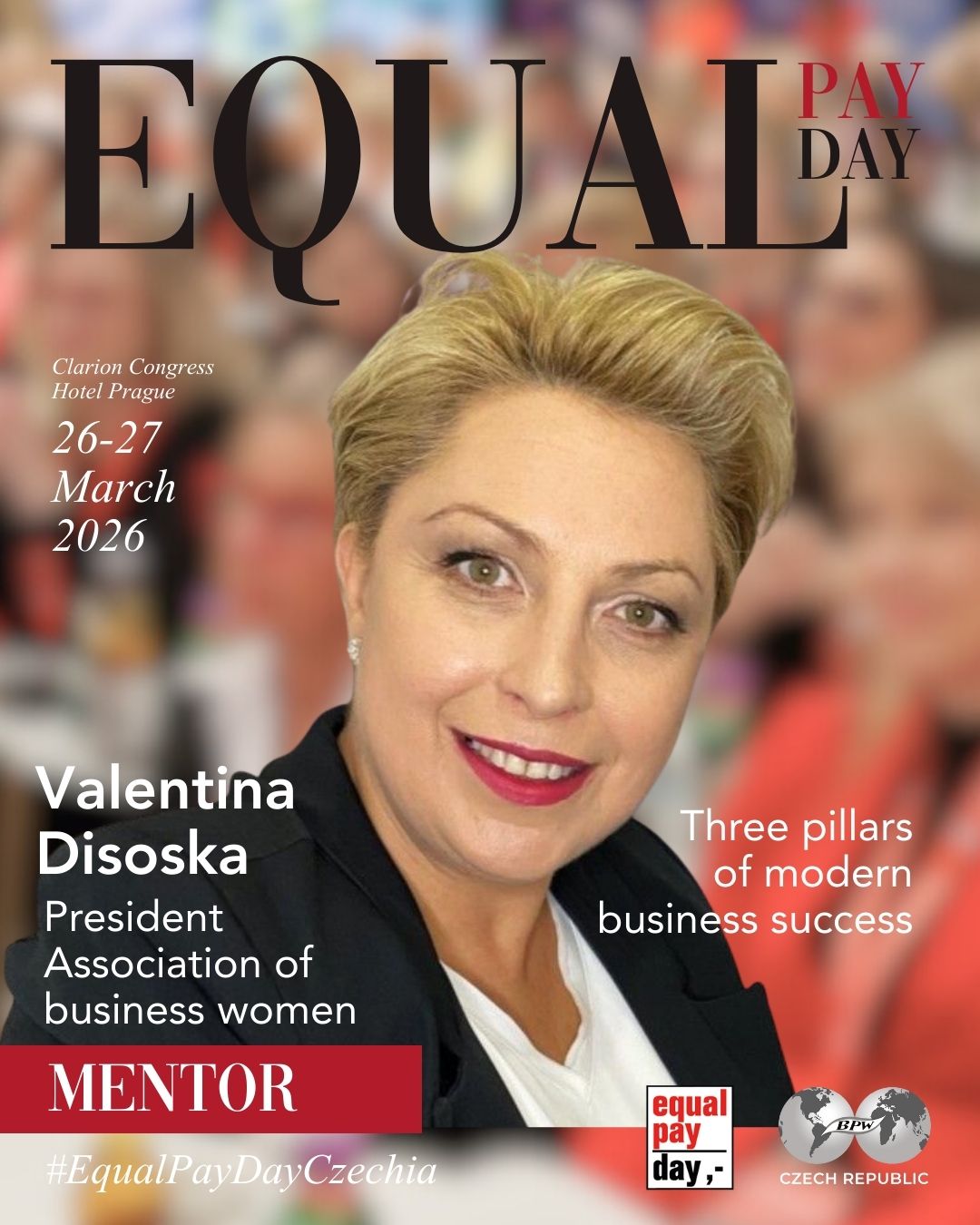
This approach is also reflected in the Equal Pay Day mentoring programme. Valentina Disoska, President of the Association of Business Women, focuses on three pillars of modern business success: leadership and policy creation, negotiation and partnerships, and the strategic use of digitalization and AI to transform businesses. Her mentoring topic demonstrates how combining human skills with technological literacy becomes a decisive factor for sustainable growth and leadership.
Brain Capital and the Gender Gap
One of the most striking parts of the report focuses on women’s brain health, an area that has long been under-researched and under-prioritized in economic and workplace strategies.
Women are disproportionately affected by several brain-related conditions, including depression, anxiety, migraines and dementia. Globally, nearly two-thirds of people living with Alzheimer’s disease are women. Hormonal transitions such as pregnancy, the postpartum period and menopause can significantly affect cognitive function, concentration and emotional regulation – yet workplace systems rarely take these realities into account.
These health-related challenges intersect directly with career trajectories. Interrupted careers, reduced working hours, limited access to leadership roles and persistent pay gaps are not isolated issues. They are part of a broader system that fails to adequately support women’s brain health and long-term brain capital.
Closing the women’s health gap could unlock up to 25% of the potential economic gains associated with improved health outcomes. This makes gender equality not only a social priority, but a clear economic opportunity.
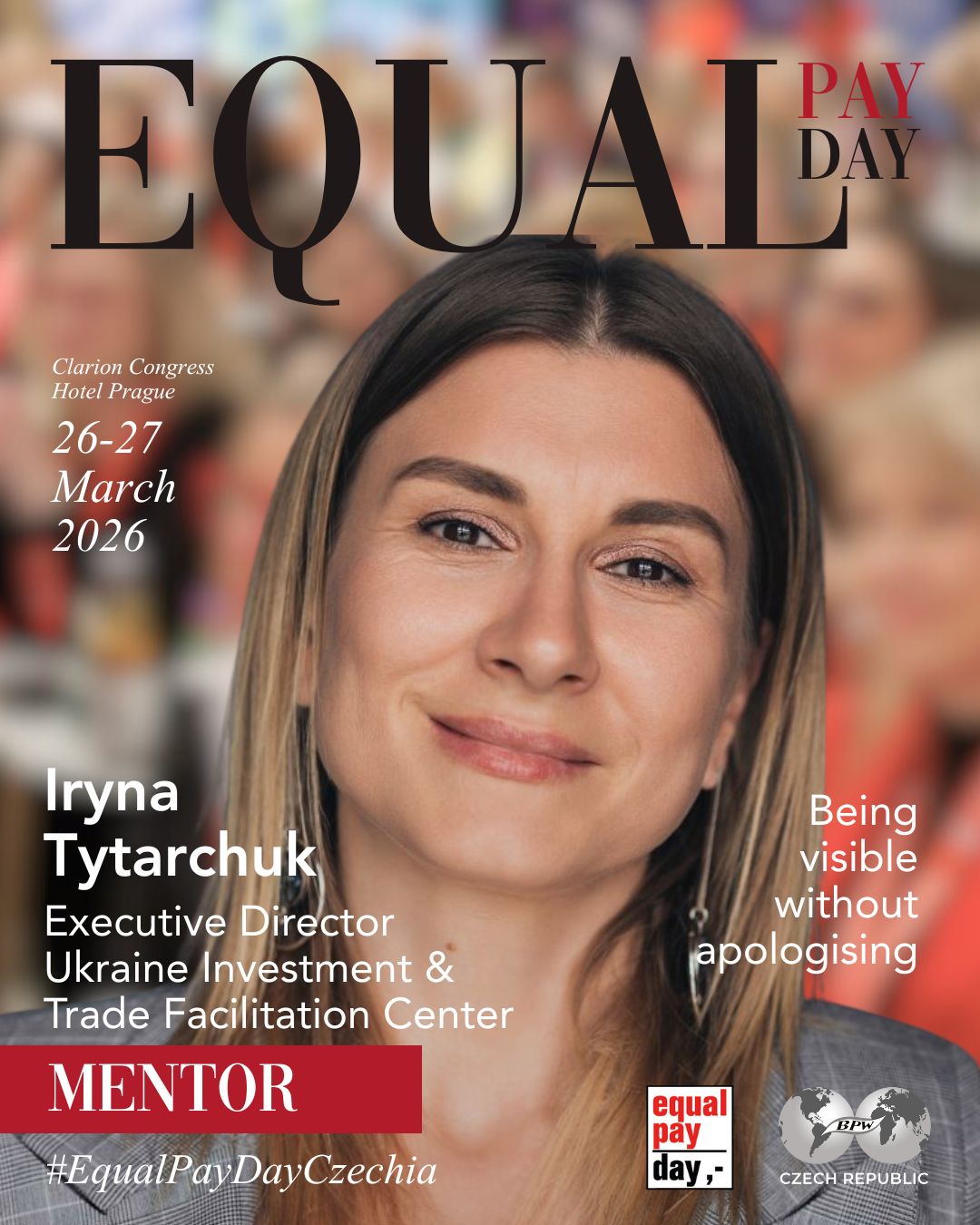
Systemic barriers also shape how women show up in leadership. Iryna Tytarchuk, Executive Director of the Ukraine Investment & Trade Facilitation Center, addresses this directly in her mentoring topic “Being visible without apologising”, focusing on leadership presence, career strategy and access to funding. Visibility, confidence and access to capital remain critical – and unevenly distributed – elements of economic equality.
Why Equal Pay Is a Brain Capital Issue
Equal Pay Day traditionally highlights the moment in the year when women’s earnings finally “catch up” with what men earned the previous year. But the message goes far beyond wages.
Pay inequality reflects deeper structural imbalances:
- how work is valued,
- whose skills are recognized
- and whose contributions are rewarded.
Visibility and personal positioning play a crucial role in this dynamic.
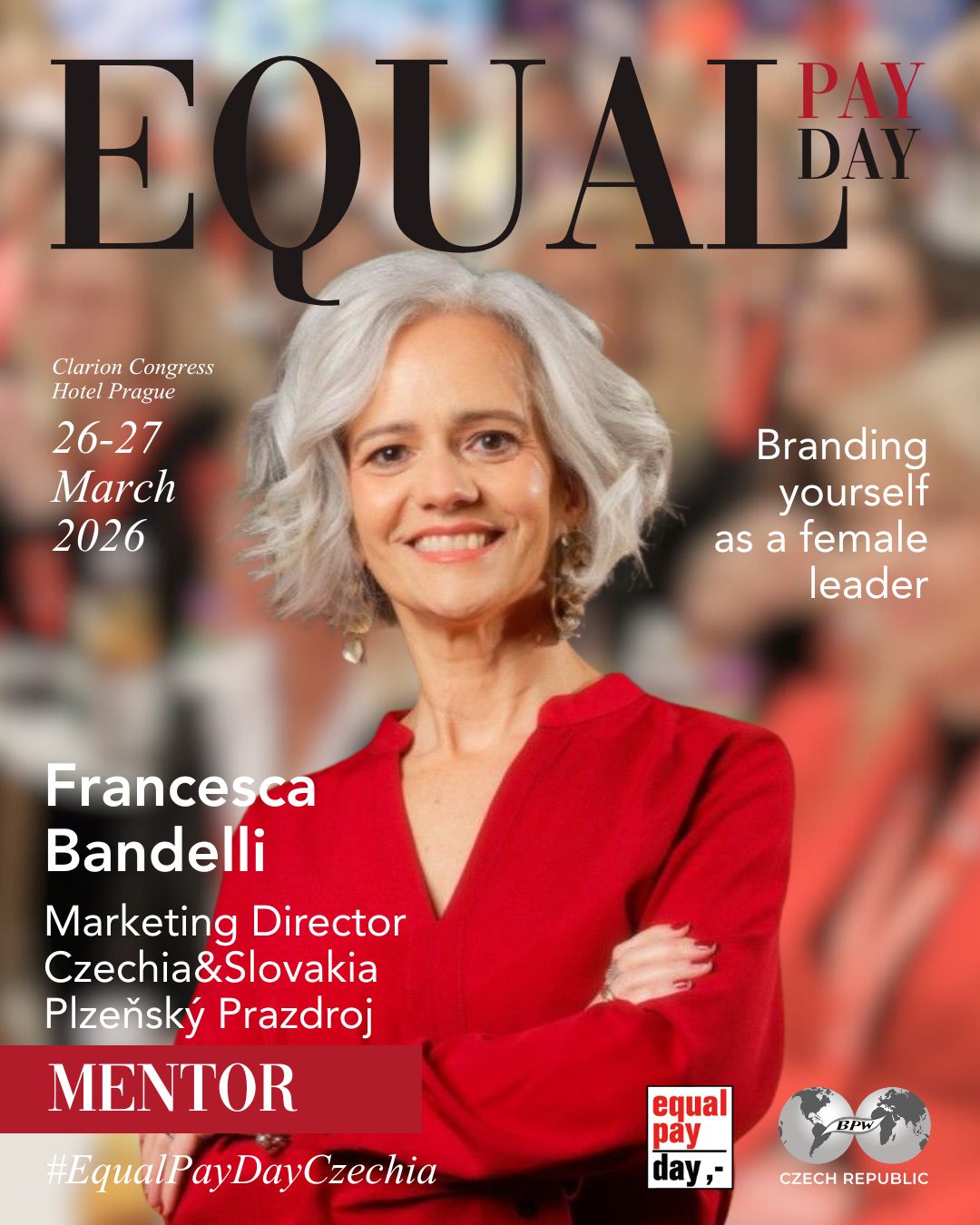
In the Equal Pay Day mentoring programme, Francesca Bandelli, Marketing Director for Czechia and Slovakia at Plzeňský Prazdroj, works with women leaders on branding themselves as female leaders. This mentoring topic highlights how self-presentation, confidence and strategic personal branding influence career progression, leadership opportunities and fair evaluation in the workplace.
When women’s work is underpaid or undervalued, societies lose talent, innovation and productivity. When brain health and brain skills are neglected, burnout rises, performance declines and long-term costs increase – for individuals, organizations and economies alike. Investing in brain capital delivers returns not only in well-being, but also in GDP growth and organizational resilience.
What This Means for Leaders, Employers and Policymakers
In the age of AI, organizations that want to remain competitive must rethink how they support people across the entire life course. This includes:
- embedding brain health into workplace culture,
- supporting flexible and inclusive career paths,
- investing in lifelong learning and leadership development,
- and addressing pay equity as a strategic priority, not a compliance exercise.
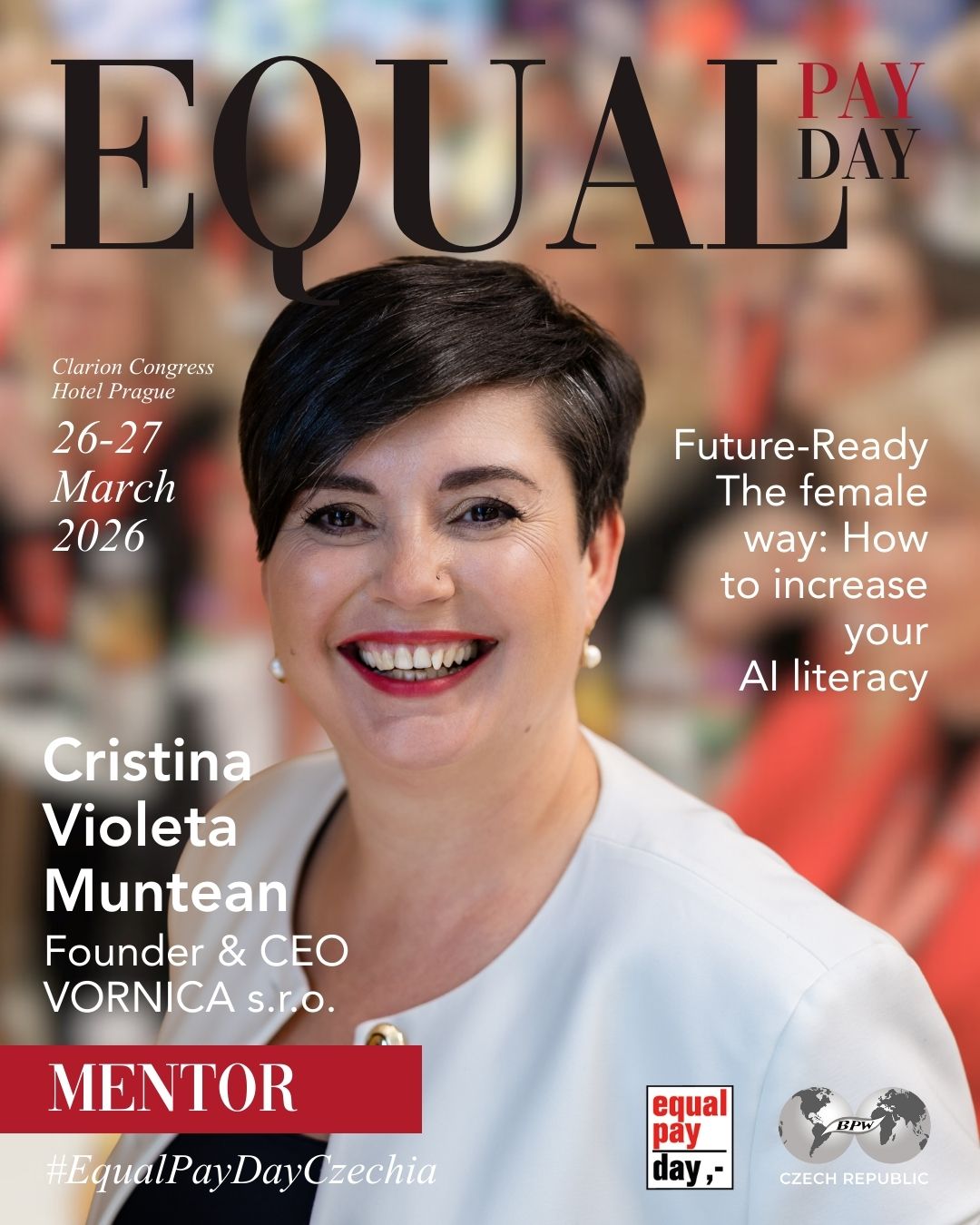
Future competitiveness also depends on who can turn AI into real value. Cristina Violeta Muntean, Founder and CEO of VORNICA s.r.o., focuses on AI literacy as a driver of salary growth, career advancement and leadership development. Her mentoring topic illustrates how future-ready skills can become a powerful engine for economic empowerment when women are equipped to use them strategically.
Gender equality is not a “nice to have” in this transformation. It is a prerequisite for fully unlocking human potential.
Equal Pay Day as Part of the Brain Economy
The World Economic Forum describes the emerging “brain economy” as a new frontier, where human intelligence and artificial intelligence work in partnership. For this economy to thrive, investments in technology must go hand in hand with investments in people.
Equal Pay Day is an integral part of this vision. It draws attention to the systemic barriers that prevent women from fully contributing to – and benefiting from – economic growth. In the age of AI, ignoring these barriers is no longer just unfair. It is economically unsustainable.
If stronger brains build stronger businesses, economies and societies, then equal pay and gender equality are not just moral imperatives – they are economic ones.
Turn insight into action at Equal Pay Day
The age of AI calls for new leadership, fairer systems and a stronger focus on human potential. Equal Pay Day brings these conversations to life – through expert discussions, data-driven insights and mentoring with leaders who are shaping the future of work.
Join us at Equal Pay Day and be part of the brain economy in action.
👉 Get your ticket here